


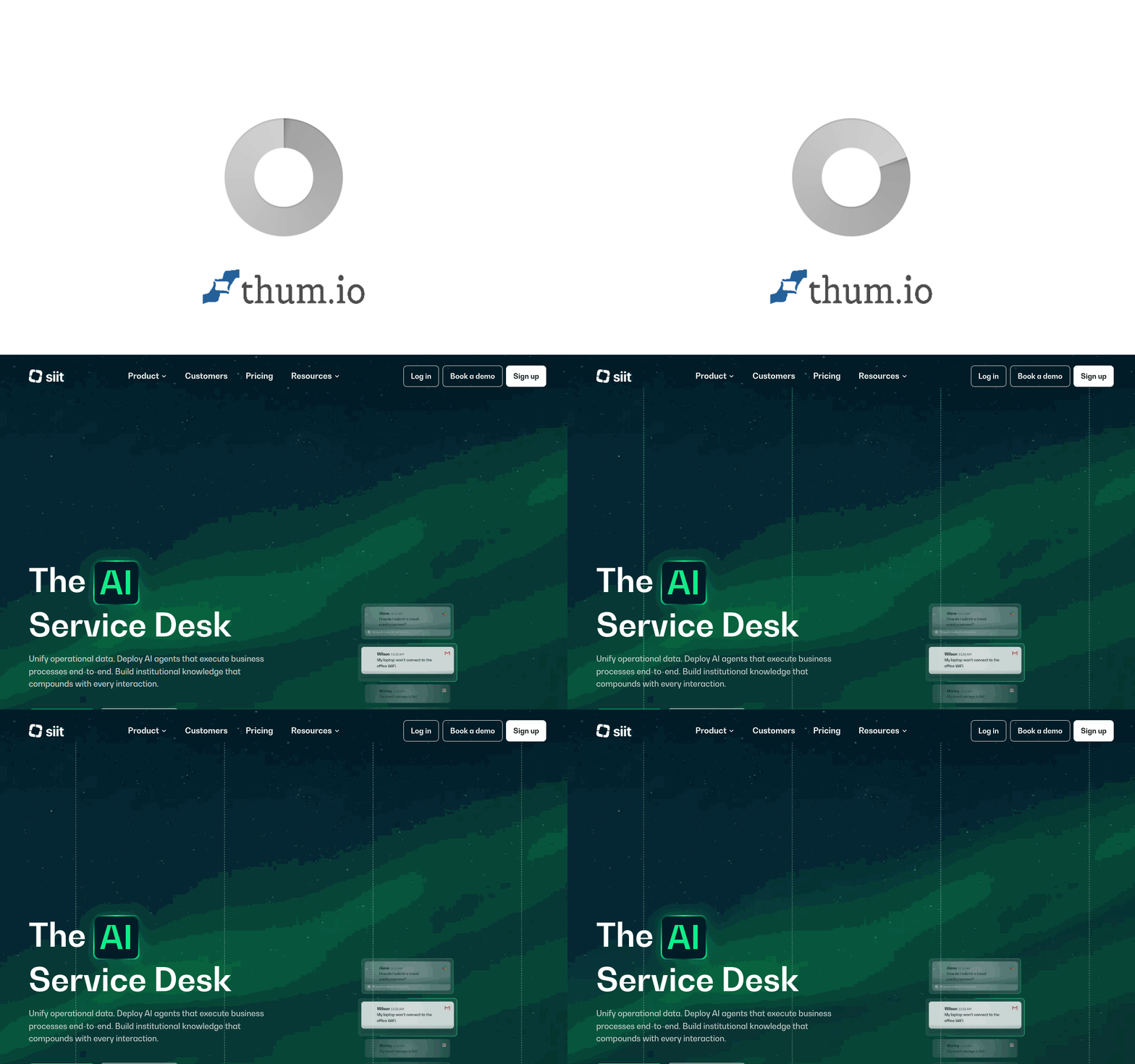
Siit is a chat-native service desk designed for IT, HR and Ops teams that want to industrialize their internal support directly in Slack or Microsoft Teams. The platform combines dynamic request-intake forms, AI agents that automatically triage and route tickets, in-chat approvals, and two-way synchronization with existing HRIS and ITSM systems. Siit particularly targets organizations of 50 to 500 employees that want fast deployment and chat-first support without imposing an external portal on their teams.
What is Siit?
Siit is an internal service desk SaaS platform designed for IT, HR and Ops teams that want to industrialize their support without imposing an external portal on their employees. The solution is chat-native: requests are initiated directly in Slack or Microsoft Teams through dynamic forms, handled by AI agents that triage, route and sometimes resolve, then synchronized with existing systems (HRIS, ITSM, business tools). Siit mainly targets organizations of 50 to 500 employees that consider Slack or Teams their central collaboration hub and that want to avoid the complexity of traditional ITSM. The platform is GDPR-compliant and SOC 2 Type 2 certified, which makes it credible with European and North American HR and IT leaders.
Main features
Siit is built around several functional blocks. Dynamic forms structure request intake directly in Slack or Teams, with conditional fields, validations and attachments. AI agents analyze the request, categorize it, identify the right owner and can directly answer frequent questions via a connected knowledge base. Approval workflows handle multi-step validations (manager, finance, IT) directly in chat, without switching tools. Ticket management tracks requests with statuses, priorities, SLAs and reporting. Two-way synchronization with HRIS (BambooHR, Personio, Workday) and ITSM (Jira Service Management, ServiceNow) avoids double entry and ensures data consistency. The built-in knowledge base feeds the AI agents and lets employees find answers in self-service. Finally, Siit offers analytics on volumes, request types, resolution times and AI deflection rate, as well as an API for advanced use cases.
Use cases
Siit is used for many internal use cases. IT teams digitize their helpdesk: access requests, hardware problems, software requests. HR teams manage onboardings, leave, certificates and payroll questions through a unified chat channel. Finance teams handle expense reports, spending approvals and accounting questions. Ops teams centralize various requests (badge, meeting room, travel). Legal teams handle contract-review or compliance requests. All these uses share the same logic: replacing a mix of Slack DMs, emails and scattered forms with a unified, structured and automated channel. The result is a drastic reduction in processing time and a measurable improvement in employee satisfaction.
Advantages
Siit’s main benefit is the higher adoption rate: by putting support where employees already work (Slack or Teams), Siit achieves engagement rates far higher than traditional ITSM portals. The second benefit is AI deflection, which can automatically handle up to 28% of repetitive requests. The third benefit is deployment speed, with go-live possible in less than an hour. The fourth benefit is traceability: every request is documented, routed and tracked, with reliable analytics. Finally, Siit improves support-team productivity by eliminating repetitive tasks and focusing their effort on high-value requests.
Pricing
Siit offers per-admin pricing with two main plans. The Standard plan at $29 per admin/month (billed annually) covers the essential features: dynamic forms, basic AI agents, HRIS/ITSM synchronization and unlimited employee access. The Pro plan at $49 per admin/month unlocks advanced approval workflows, premium analytics, SSO and security controls. An Enterprise plan (custom quote) offers tailored contracts, data residency, dedicated support and SLAs. Note: all plans include unlimited employee access, which makes Siit particularly competitive against traditional ITSM that often charge per end user.
Conclusion
In 2026, Siit establishes itself as a credible and modern alternative to traditional ITSM for mid-market organizations that have adopted Slack or Microsoft Teams. Its chat-native approach, AI agents and fast deployment make it a particularly relevant choice for IT and HR teams that want to modernize their support without investing months in a project. For large groups with a mature ServiceNow ITSM or for external customer support, Siit is not the best choice. But for the internal support of organizations of 50 to 500 employees, it is today one of the most accomplished solutions on the market.