



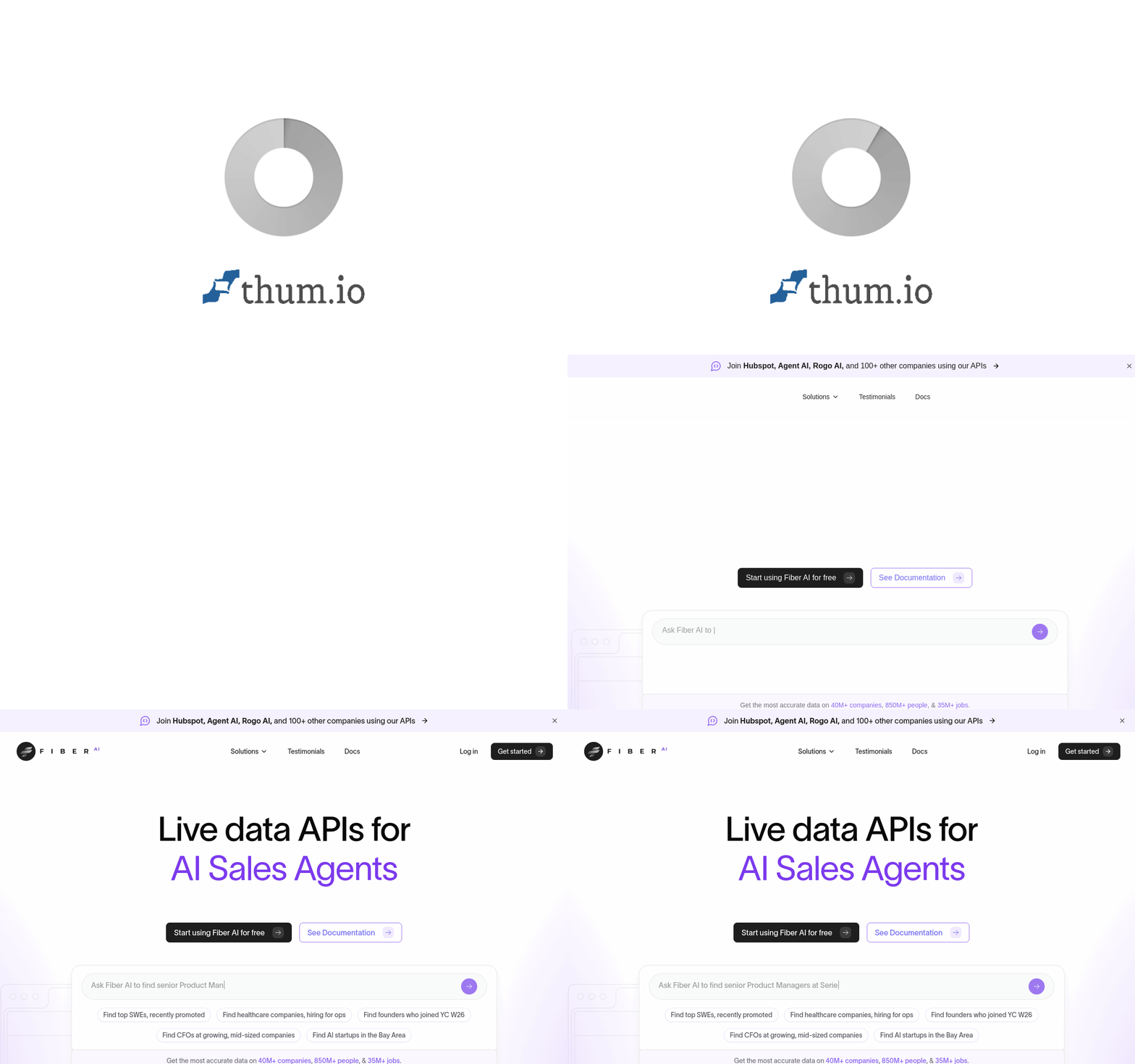
Fiber AI is an AI prospecting agent that combines ultra-fresh B2B data, multi-source enrichment (50+ providers) and hyper-targeted personalization for modern outbound teams. The platform positions itself as an alternative to Clay and LinkedIn with better value for money, open APIs to integrate the data into any workflow, and open rates claimed at 80% thanks to deep personalization. Fiber AI targets hyper-growth startups and RevOps teams that want to industrialize their prospecting.
What is Fiber AI?
Fiber AI is an AI prospecting agent SaaS platform that combines B2B data aggregated from more than 50 providers, multi-source enrichment, hyper-targeted personalization and outbound orchestration. Unlike tools that rely on a single proprietary database, Fiber AI aggregates sources such as LinkedIn, BuiltWith, Gartner, Crunchbase and many others in real time to offer superior coverage and fresher data. The platform mainly targets hyper-growth startups, RevOps teams, outsourced prospecting agencies and B2B recruiters that want to industrialize their sourcing without depending on a single provider. Fiber AI offers a classic SaaS interface but also open APIs to integrate its data and workflows into any custom stack.
Main features
Fiber AI structures its offering around several functional blocks. Prospect research leverages more than 50 providers in real time to identify leads matching a precise ICP. Multi-source enrichment completes each lead with contacts, verified emails, technographics, intent signals, fundraising and other business data. Hyper-targeted personalization generates contextual outbound messages based on the enriched data of each lead, making it possible to reach open rates of up to 80% according to the vendor’s figures. Outbound orchestration lets you configure multichannel sequences (email, LinkedIn) with cadence rules and A/B testing. The open APIs give access to the same data and workflows programmatically, particularly useful for RevOps and tech teams that want to integrate prospecting into their custom stack. Fiber AI also offers native integrations with the main CRMs and Sales Engagement tools.
Use cases
Fiber AI is used for many use cases. Hyper-growth startups use the platform as the foundation of their outbound, reaching significant volumes with a small Sales team. RevOps teams leverage the open APIs to integrate Fiber AI data into their stack (CRM, data warehouse, internal tools). Outsourced prospecting agencies deploy Fiber AI to manage several client accounts with fresh, economical data. B2B recruiters source technical or sales profiles in volume with verified contacts. Marketing teams feed their ABM campaigns with ultra-precise audiences. Founders in direct go-to-market offload the tedious search for prospects. All these uses share a common logic: replacing a mix of fragmented, expensive providers with a unified and affordable platform.
Advantages
Fiber AI’s main benefit is cost savings: with data 4x cheaper than Clay, the platform makes it possible to handle significantly higher volumes at constant budget. The second benefit is data freshness: real-time aggregation from 50+ sources avoids the outdated databases typical of traditional providers. The third benefit is flexibility: the open APIs make it possible to integrate Fiber AI into any workflow or technical stack. The fourth benefit is personalization quality, which translates into high open rates (up to 80% claimed) and therefore a better outbound ROI. Finally, Fiber AI eliminates dependence on a single provider, which reduces the risk of service disruption or unilateral price increase.
Pricing
Fiber AI offers a three-tier pricing structure. The Prospector plan at $300/month includes 15,000 credits, that is about 2,500 enriched contacts per month, with full API access. The Growth plan at $900/month multiplies the available volume and unlocks advanced orchestration features. The Enterprise plan at $2,400/month targets very large teams with substantial volume, SSO, audit log and a dedicated account manager. Beyond that, Fiber AI offers tailored contracts for organizations with specific needs. Note: pricing is volume-based, which requires anticipating outbound usage to avoid overages or underuse. Annual plans offer a significant discount.
Conclusion
In 2026, Fiber AI establishes itself as a credible and economical alternative to the established players in the B2B data market. Its value proposition (data 4x cheaper, multi-provider aggregation, open APIs) answers a real frustration of modern outbound teams facing costs that explode with growth. The platform is still young and requires some technical maturity to be fully leveraged, but for hyper-growth startups and RevOps teams that want to industrialize their prospecting without paying top dollar, Fiber AI is very clearly a choice worth seriously evaluating. It is also a signal of the market’s shift toward more transparency and openness of B2B data.