


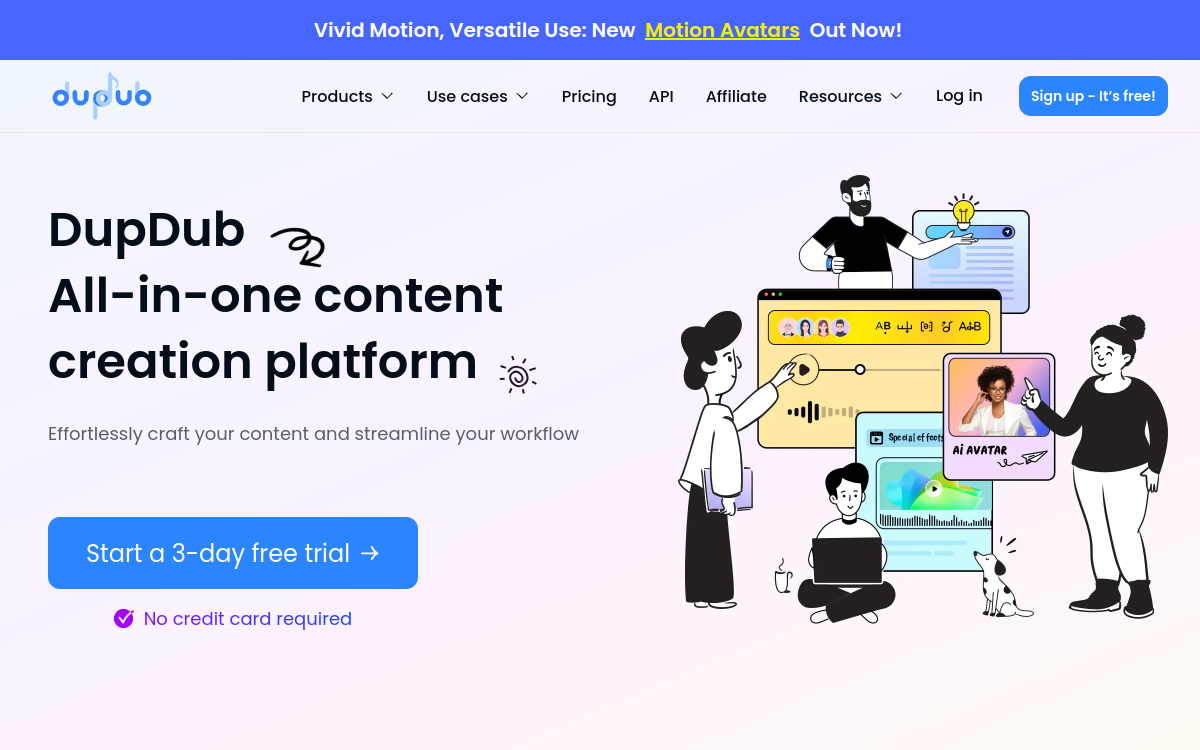
DupDub is a voice synthesis and video editing solution that allows you to create natural AI voiceovers in many languages. The tool features an integrated studio to synchronize AI voices with visuals, subtitle and adapt videos to different markets. It targets creators, companies and marketing teams who want to produce multilingual content without going through traditional recording studios. Ideal for localization, tutorials and presentation videos.
What is DupDub?
The essentials
Concretely, DupDub is based on a text-to-speech engine that transforms scripts into AI voiceovers. The user selects a language, voice and style, then generates a synthetic recording. The integrated video studio then allows associating this voice with visuals, whether slides, images or existing video sequences. It’s also possible to manage subtitles and adjust timing to achieve coherent rendering. This approach simplifies production of tutorials, product presentation videos or multilingual educational content.
Key features
DupDub’s key features include a vast catalog of AI voices, support for many languages, management of settings such as speed or tone, and a video studio to associate audio and visuals. The user can import videos, images or slides, position the voiceover, add subtitles and export the final result. Some plans provide audio and video minute quotas, collaboration options and advanced features for project management.
Use cases
DupDub use cases are numerous: product tutorials for international markets, explanatory videos for SaaS, multilingual training modules or help content embedded in a knowledge base. Marketing teams can use it to create variants of existing videos in multiple languages, while educational teams can produce audio or video content suited to different audiences. The tool is particularly useful when content localization is a strategic issue, but budgets and deadlines are tight.
Advantages
DupDub brings obvious benefits in terms of time and cost. Voice synthesis allows rapid generation of voiceovers without organizing studio recordings or managing multiple voice actors for each language. Centralizing audio and video editing within the same tool reduces workflow complexity. Companies can thus multiply covered languages and update their content more frequently, which is particularly valuable in an environment where products evolve rapidly.
Pricing
DupDub’s pricing is based on plans that combine audio and video minute quotas, advanced voice synthesis features and editing options. Entry-level offers suit individual creators or small organizations, while more comprehensive plans target organizations generating significant volumes of localized content. A trial period or freemium plan often allows testing voice quality and studio before committing.
Conclusion
In conclusion, DupDub is an interesting solution for actors with a regular need for voiceovers and multilingual videos. It doesn’t fully replace professional voice actor expertise for very sensitive or artistic projects, but is an effective tool for industrializing production of tutorials, presentations and product videos. On Comparateur-IA.com, DupDub deserves its place among AI tools focused on audio and video, with particular focus on voice synthesis and localization.