



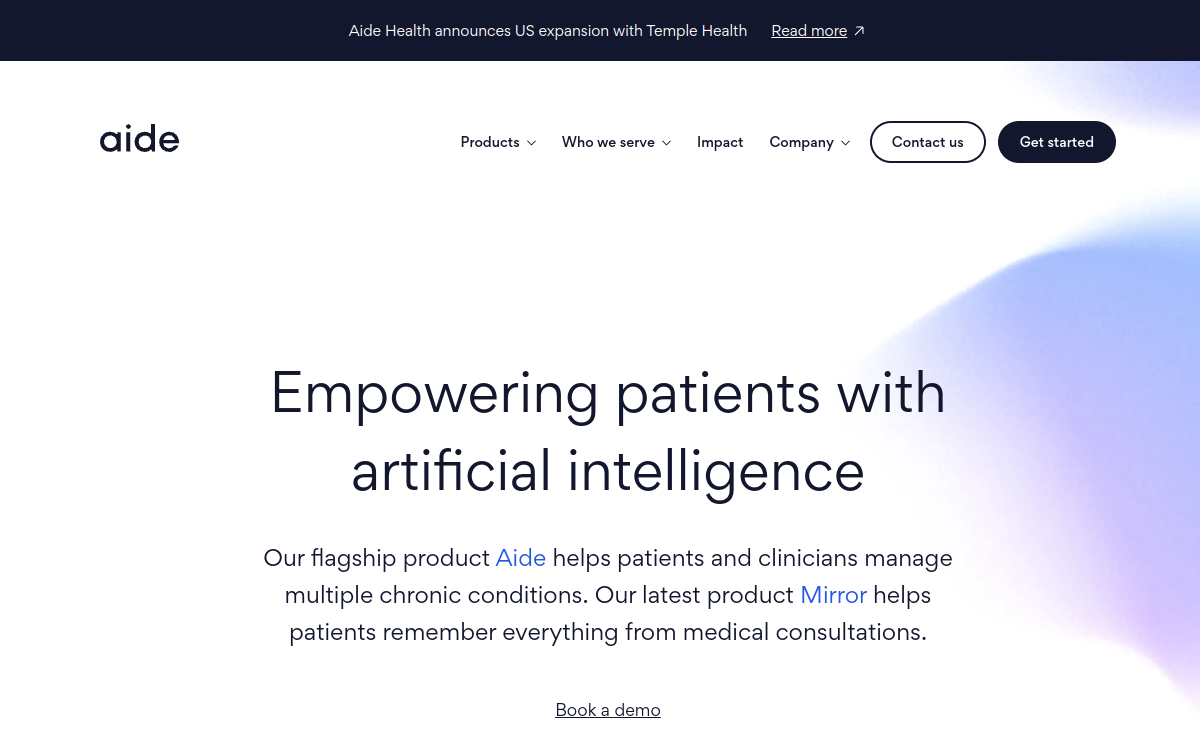
Chronic illnesses represent a major challenge for contemporary healthcare systems. Diabetes, cardiovascular diseases, respiratory disorders, or inflammatory pathologies affect millions of people and require rigorous daily monitoring, which is often complex to organize between multiple treatments, medical appointments, measurements to be taken, and signs to monitor. In this context, digital platforms like Aide Health offer a new approach to care, halfway between patient autonomy and coordination with healthcare professionals. This article presents in detail the positioning, features, benefits, and limitations of this promising solution designed for chronic illnesses.
What is Aide Health?
The essentials
Aide Health is a digital platform dedicated to supporting patients with chronic illnesses. Available on mobile, it helps centralize information related to a patient’s health and leverage it intelligently using artificial intelligence models. The platform also offers a B2B layer for healthcare professionals, clinics, mutual insurance companies, and employers wishing to offer a structured monitoring and therapeutic education program to their audiences, in a coordinated care approach.
Key features
On the patient side, the application offers a digital health journal to log symptoms, treatments, vitals (blood pressure, blood glucose, weight, pain), and significant events. It sends personalized reminders for medication intake and appointments, and provides summaries ready to share with the doctor. An AI assistant analyzes the data to spot trends, suggest questions to ask during consultations, and provide tailored therapeutic education. On the professional side, Aide Health offers dashboards to track cohorts, identify early warning signs, run education programs, and encourage treatment adherence. The platform is part of an approach focused on prevention, autonomy, and better coordination of care pathways.
Use cases
The use cases are diverse. A diabetic patient uses the application to log blood glucose, meals, and physical activity, and receives educational recommendations to better understand their balance. A hypertensive patient enters their blood pressure morning and evening and benefits from a visual summary they can send to their cardiologist. A person suffering from asthma tracks their attacks and treatments to better communicate with their pulmonologist. On the professional side, a clinic offers Aide Health to its patients to structure post-consultation follow-up, a mutual insurance company deploys the platform as part of a prevention program, and an employer integrates it into its health and wellness offering to support its employees.
Advantages
The benefits are numerous. For the patient, autonomy is enhanced through better self-knowledge and more effective preparation for consultations. Peace of mind is established thanks to reminders and the centralization of information. For the professional, the quality of monitoring between two consultations is significantly improved, helping to detect warning signs earlier and better adjust treatments. For institutions and payers, improving adherence and preventing complications represent a major economic stake, in addition to the quality of life offered to the patients themselves on a daily basis.
Pricing
Aide Health adopts a hybrid model. The application is generally free for patients when offered through a healthcare partner. Advanced features and B2B modules for clinics, employers, and mutual insurance companies are available upon request, with pricing tailored to the number of users and services chosen. This approach allows the platform to reach a wide patient audience while building a sustainable offering for institutional players.
Conclusion
Aide Health concretely illustrates the potential of digital technologies and AI applied to healthcare. By combining a polished patient experience with real added value for professionals, the platform helps transform the management of chronic illnesses. It is a serious, relevant, and promising solution for any player wishing to improve the monitoring, prevention, and coordination of care pathways within their healthcare ecosystem.