


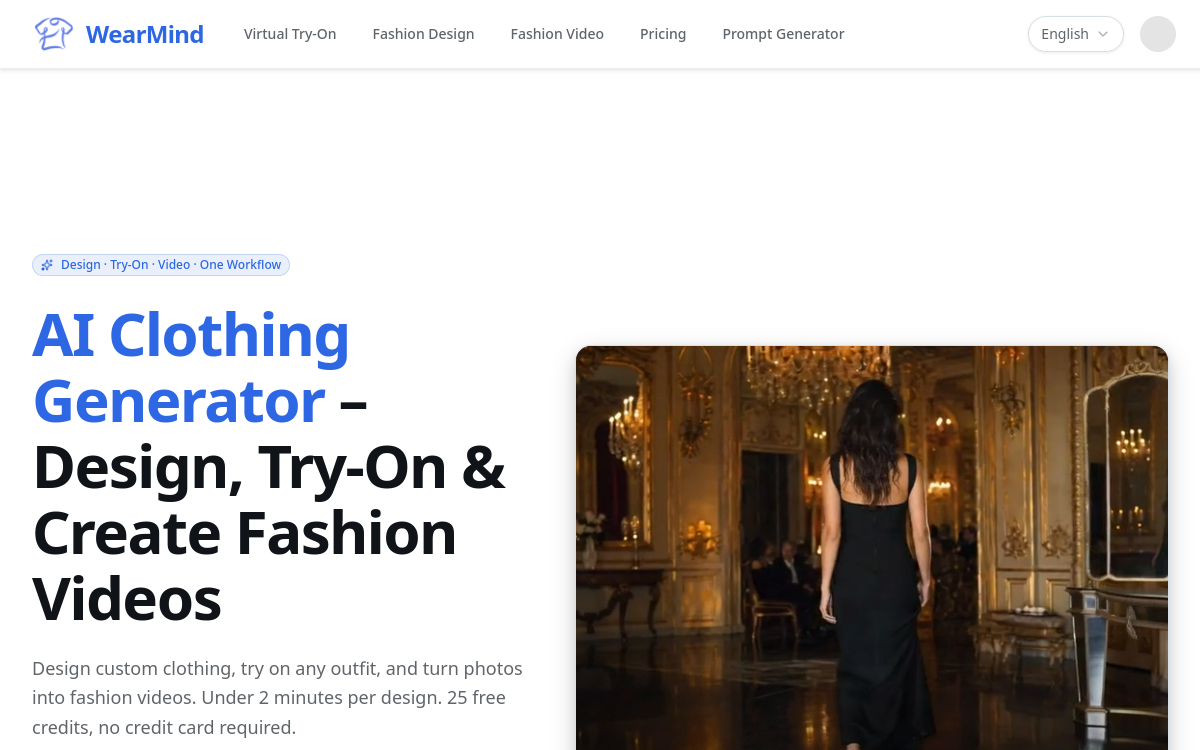
The print-on-demand market remains a highly active playground for creators and small entrepreneurs. But profitability largely depends on the ability to quickly produce original designs that sell. It is on this equation that AI Shirt positions itself with a pragmatic approach. The service does not seek to become a generalist artistic creation tool: it focuses on the specific needs of POD sellers, from generating a usable visual to creating promotional content for social media. This article reviews how the platform works, the key features to know, typical use cases, and the pricing model. The goal is to understand where AI Shirt brings real value and where its limitations might impact the daily routine of a seller on Etsy, Redbubble, or Amazon Merch effectively on a daily basis.
What is AI Shirt?
The essentials
AI Shirt is an AI t-shirt design generator designed for print-on-demand sellers. The platform offers over 20 preconfigured styles covering major market trends: minimalist typography, retro vintage, cartoon, inspiring or humorous quotes. The user selects a style, describes their concept, and gets a high-resolution visual in moments. Unlike generalist AI image tools, AI Shirt natively optimizes its outputs for textile printing: 300 DPI resolution, dimensions up to 4200×4800 pixels, transparent background, and commercial rights included. This specialization helps avoid the classic post-production frustrations when a design from another tool has to be reworked to go into actual POD production without rejection on today’s major marketplaces.
Key features
The functional core of AI Shirt is built around three components. The first is the generation itself: over 20 preconfigured styles, prompts dedicated to print-on-demand, and technically calibrated outputs (300 DPI, up to 4200×4800 pixels, transparent PNG with automatic background removal). The second component handles commercial presentation. A virtual try-on module applies the design to model photos to produce visuals ready to publish on a product page or social network. This addresses a pain point for POD sellers: convincing a potential buyer without investing in real photo shoots. The third component is promotion. A promo video generator directly targets TikTok and Reels, formats that have become essential for driving traffic to POD stores. Commercial rights are included upon creation, securing resale on Etsy, Redbubble, Amazon Merch, or independent DTC stores. For freelancers and small studios, the credit system allows experimentation without commitment: 25 free credits at signup, 5 credits per generated design, and packs adjusted to production frequency. The whole setup creates a short creation-presentation-promotion chain that simplifies the daily life of active sellers.
Use cases
AI Shirt naturally finds its place among print-on-demand sellers. A creator on Etsy can produce a collection of visuals around a specific niche in a few minutes, quickly test their performance, and iterate based on sales. Redbubble or Amazon Merch sellers can enrich their catalog without hiring an external graphic designer. Textile DTC stores, usually managed by small teams, can industrialize visual production for marketing campaigns, capsule collections, or temporary collaborations. Freelance designers use it differently: they use AI Shirt as an accelerator, either to quickly propose moodboards to their clients or to produce series of reference visuals. Finally, niche communities (gamers, sports, animals, humor) use it to launch capsule collections without bearing the cost of a dedicated studio, limiting the upfront financial risk.
Advantages
The primary benefit of AI Shirt is speed: going from an idea to a usable design in a few minutes changes the economic dynamics of a POD store. The second benefit is technical compliance: producing in 300 DPI with a transparent background avoids rejections on marketplaces, which have strict specifications. The third benefit is the coverage of the entire chain: creating a design, visualizing it on a model, and generating a promo video in the same tool simplifies operations and reduces the seller’s mental load. The included commercial rights provide valuable legal security, especially in a sector where intellectual property is a sensitive topic. Finally, the absence of a long-term commitment and the ability to test for free via the 25 offered credits limit the risk for an entrepreneur who simply wants to validate the value of AI Shirt before any actual subscription.
Pricing
AI Shirt’s pricing model is deliberately accessible. Upon registration, the user receives 25 free credits, with no credit card required, which allows generating about five complete designs since each creation consumes 5 credits. The paid subscription starts at 9 dollars per month, a threshold designed for independent sellers who want a minimal commitment. Higher tiers provide more credits and additional features, useful for sellers with a high production rate. The cost per design remains predictable thanks to the credit system, making budget planning easier. For a beginner or semi-professional POD business, AI Shirt compares favorably to generalist design tools, especially when considering the value of time saved and the commercial rights provided directly with each generated creation.
Conclusion
AI Shirt is a well-thought-out tool for print-on-demand sellers who want to save time without sacrificing the technical quality of their designs. Its specialization, 300 DPI outputs, virtual try-on, and promo video generator cover the key steps of the trade. The limitations lie in the lack of native integrations with marketplaces and an English UI, but to start or consolidate a POD business, the price-to-feature ratio remains very attractive in this segment.