


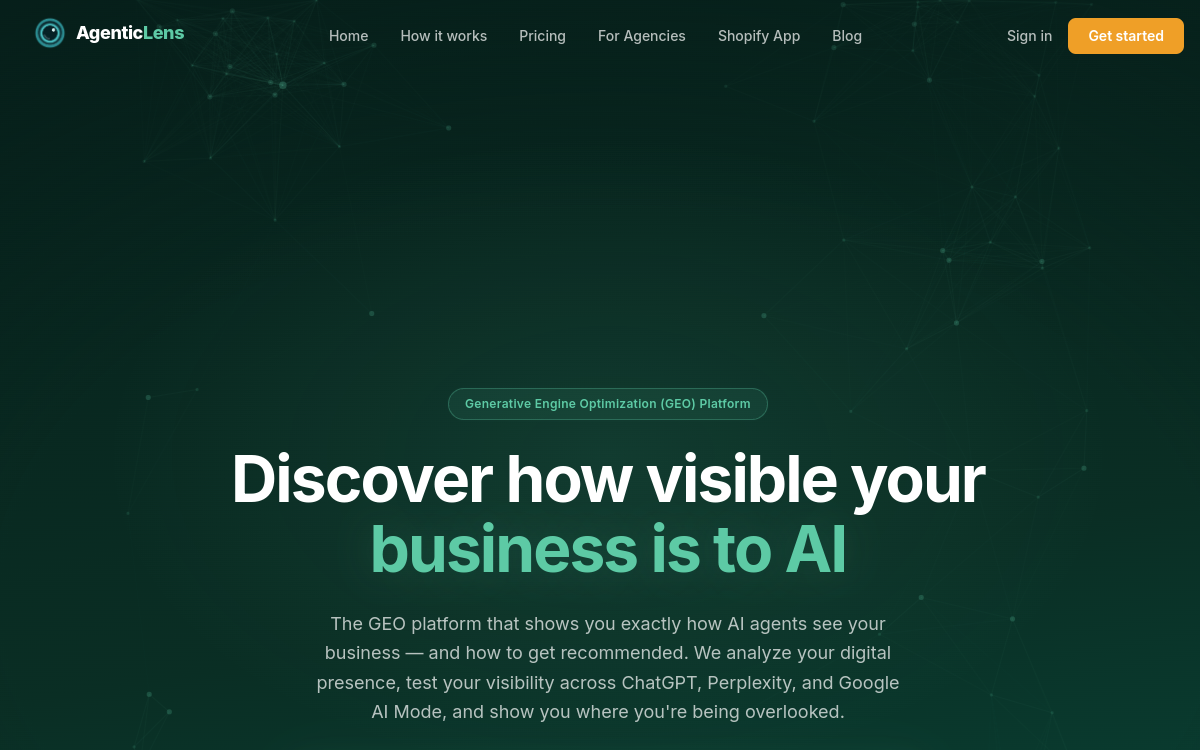
The deployment of AI agents in production marks a turning point for many teams: experimentation becomes a service, with its share of reliability, cost and security challenges. AgenticLens enters this landscape with a simple promise: bringing to AI agents what observability tools brought to microservices ten years ago. The platform focuses on what really happens when an agent works: what decisions it makes, which tools it calls, how much it costs and where it goes wrong. In this article, we look at what AgenticLens brings, its features, its use cases and its limits.
What is AgenticLens?
The essentials
AgenticLens is an observability platform specifically designed for AI agents. It plugs into existing agents and captures every tool call, every exchange with a model, every memory change, as well as the associated costs. The goal is to offer a clear view of agents’ behavior in production, both for ops teams that must guarantee a stable service, for data teams that want to measure impact, and for finance teams that must control costs. The platform adopts a centralized approach, where each agent is tracked independently, with the ability to aggregate data for portfolio analyses.
Key features
At the heart of AgenticLens is a layer of detailed logs on every agent run. The dashboards let you visualize the number of runs, their duration, their success rate and their average cost, all filterable by agent, by tool or by period. The replay feature gives you the ability to replay a complete run, which proves valuable for debugging or analyzing unexpected behavior. Memory management lets you track updates and rollbacks, where classic frameworks often lose readability. On the collaborative side, several team members can view the same data, comment on a run or tag an incident. The API lets you export data to existing BI stacks, and webhooks can notify in case of an error or cost drift. The tool remains framework-agnostic: whether the agents are built on homemade code, on open-source libraries or on proprietary platforms, AgenticLens can connect to them.
Use cases
AgenticLens finds its place in several contexts. A startup deploying an AI assistant for its users can track costs and response quality to adjust its business model. A data team can use the platform to compare several agent configurations and identify the most effective one. An ops team can use it to set up alerts in case of an abnormal increase in cost or errors. Software vendors integrating AI agents into their product find in it a way to keep control over production behavior, without depending on hard-to-read internal logs.
Advantages
The main benefit is visibility. Without observability, AI agents can quickly become costly and unpredictable black boxes. AgenticLens turns this opacity into actionable data, which changes the nature of the conversation between technical teams and management. The platform also helps industrialize a continuous-improvement approach: spotting recurring errors, adjusting prompts, optimizing tool chains. Cost tracking is another major contribution, at a time when the API bill can explode without control.
Pricing
AgenticLens generally offers a freemium plan to get started, with a quota of tracked events. The paid plans align on the volume of runs, the number of agents and the depth of analysis features. More advanced organizations can negotiate enterprise plans with support, custom integrations and enhanced security options. Compared to the value delivered in terms of reliability and cost optimization, the entry ticket remains reasonable.
Conclusion
AgenticLens embodies the maturation of the AI agent market. As these become critical components of the information system, tools dedicated to their supervision become indispensable. For teams already committed to this path, AgenticLens offers a serious, complete and well-designed answer. A useful partner to move from the impressive demo to a measured and industrialized service.