


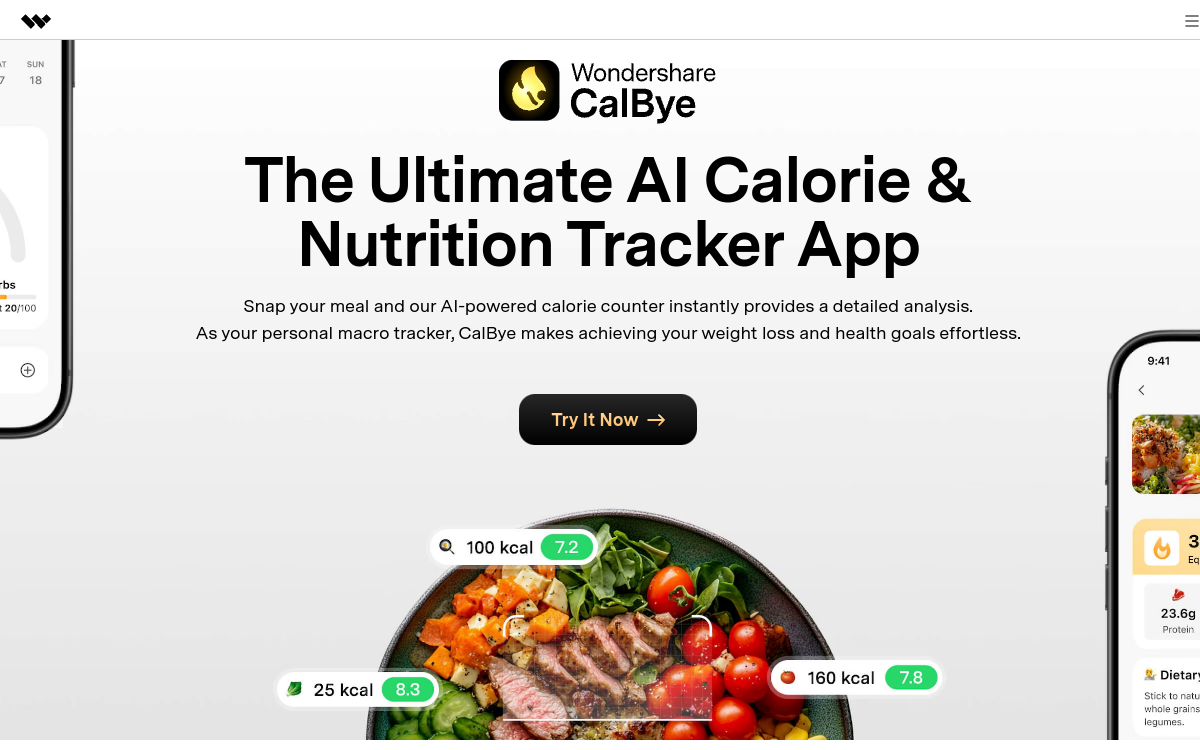
CalBye is a nutrition tracking application powered by artificial intelligence. By simply photographing a meal, AI recognizes foods, estimates portions, and calculates calories and macros. More than just a counter, CalBye acts as a personalized nutrition coach, proposes adapted goals, and tracks your progress. Available on mobile with freemium and in-app purchases.
What is CalBye?
The essentials
CalBye is a mobile nutrition tracking application powered by artificial intelligence. Its image recognition engine analyzes meal photos to identify foods, estimate portions, and automatically calculate calories and macronutrients. Beyond simple counting, CalBye acts as a personalized nutrition coach that adapts its advice to the user’s profile, goals, and history. The application centralizes an intelligent food journal, goal tracking, and an AI recipe library to transform each meal into a lever for improving health.
Key features
CalBye rests on four functional pillars. The first is food recognition by photo, which detects the foods present on a plate and estimates their portions from a simple shot. This technology avoids manual entry and significantly accelerates daily nutrition tracking. The second pillar is personalized nutritional analysis, which calculates calories, protein, fat, carbohydrates, and provides insights adapted to the user’s health profile. The third pillar concerns automatic goal tracking: the application adjusts its recommendations based on progress made, atypical days, or changes in routine. The fourth pillar offers an AI-generated recipe library based on preferences, dietary restrictions, and objectives. CalBye completes the set with a visual food journal, progression charts, and motivational notifications to support regular use.
Use cases
CalBye addresses a broad audience. People engaged in weight loss find a simple alternative to manual entry applications often abandoned. Athletes seeking precise tracking of their macronutrients can adjust their diet in real time to reach their performance or body composition goals. Young adults in shared housing, out, or traveling benefit from an experience adapted to varied and unexpected meals, where traditional databases show their limitations. Users simply wanting to better understand their diet, without strict objectives, can use it as an intelligent nutrition journal.
Advantages
CalBye’s benefits are multiple. The elimination of manual entry significantly improves long-term adherence, a critical point in any nutrition initiative. Personalized recommendation customization makes coaching relevant beyond simple numbers. The presence of adaptive recipes transforms simple measurement into concrete proposal, which helps take action. Finally, the entirely mobile experience allows using the application in any situation, in a restaurant as at home, without a break between measurement and daily life.
Pricing
CalBye is based on an accessible freemium model for all. The application downloads for free and offers discovery of essential functions without commitment. In-app purchases unlock advanced features such as unlimited personalized recipes, detailed analyses, and individualized coaching. This approach allows everyone to test the solution before potentially upgrading to premium, with no mandatory subscription from the start.
Conclusion
CalBye brings fresh air to the nutrition app universe by replacing manual entry with intelligent photo recognition. Its integrated coach and adaptive recipes make it a relevant health companion for mainstream users, provided you accept that precision depends on photo quality.